Why is UFO 50 considered a masterpiece by game designers?
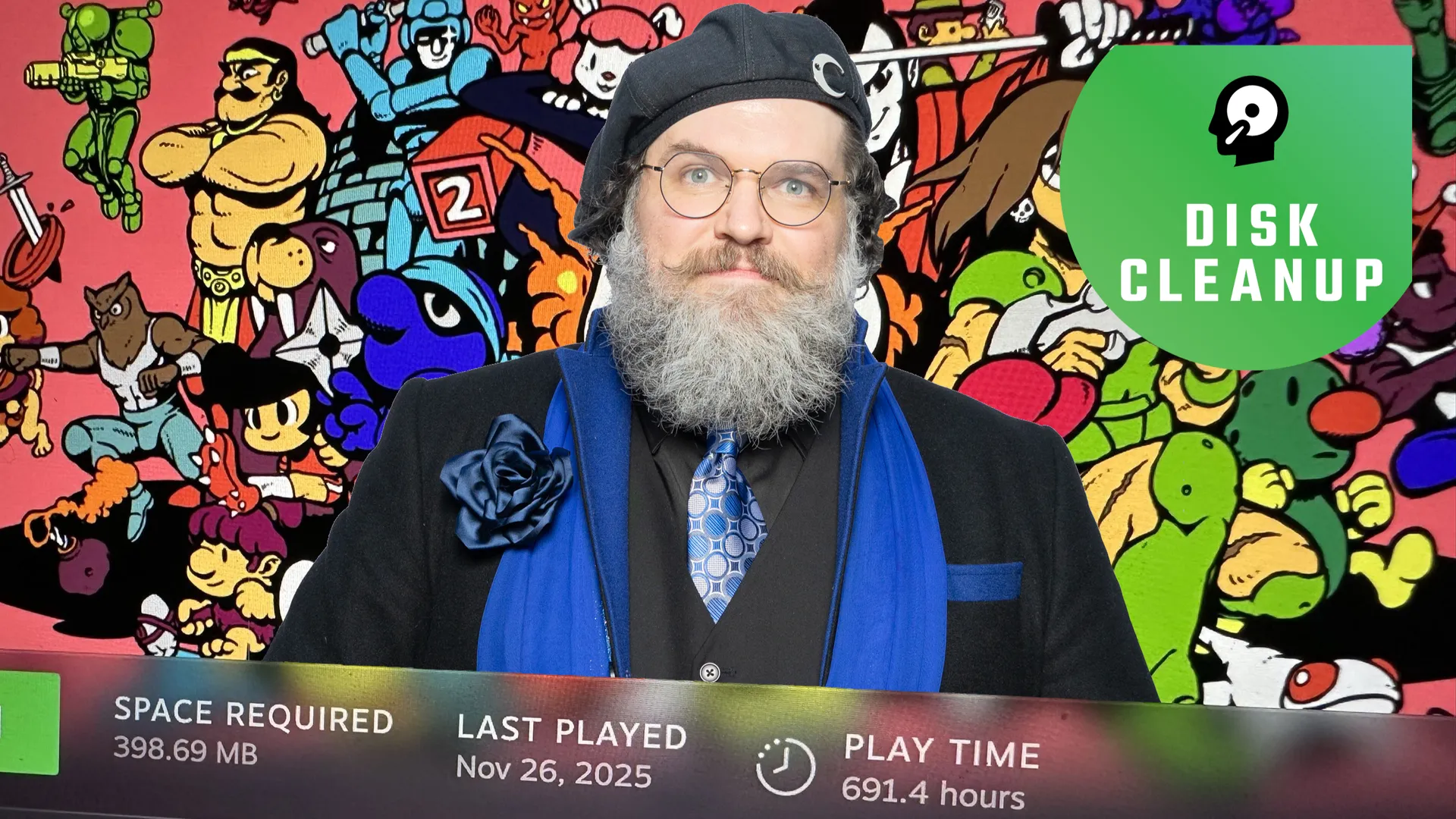
UFO 50 stands out as a collection of 50 full-fledged games that simulate the experience of playing on a fictional 1980s console known as the LX. For Tonda Ros, the creator of the acclaimed puzzler Blue Prince, the title represents a pinnacle of design, earning him 691 hours of playtime on Steam. Unlike many compilations that offer mere mini-games, this collection provides depth and variety across every major genre, mirroring the breadth of a real retro era.
Ros highlights the incredible design work present in individual titles, such as the puzzle platformer Mortol. In this game, players manage a spaceship filled with characters who must sacrifice themselves to ensure the collective's progress. This level of mechanical ingenuity is what separates UFO 50 from standard nostalgia-driven projects. The collection encourages a specific type of engagement: playing through the titles chronologically to mimic the experience of a child receiving one new game per week.
The depth of the LX collection
The strength of the collection lies in its refusal to compromise on scope. Each of the 50 games is designed to be as substantial as a standalone title from the 1980s. Ros notes that he has achieved 'golden' status in every cartridge and 'cherry'd' most of them, a testament to the high replayability and completionist appeal of the library. The variety ensures that even players who do not typically enjoy retro-style games find something that resonates with them.
How does Tonda Ros view modern game design trends?
Tonda Ros approaches game development with a perspective shaped by being a pioneer in specific niches. He notes that Blue Prince was developed before the massive industry surge in deckbuilding mechanics, which explains why the game maintains a unique identity despite sharing tabletop design elements with the genre. This tendency to work in parallel with—rather than in response to—current trends allows for more original creative decisions.
Ros also observes a significant gap in the current market regarding first-person puzzle games. While genres like action or battle royale are often oversaturated, he argues that the community remains 'ravenous' for high-quality immersive puzzlers. He cites successful titles like Outer Wilds and Obra Dinn as evidence that there is a dedicated, underserved audience for deep, atmospheric, and intellectually challenging experiences. This market observation likely influenced the decade-long development of Blue Prince, which draws inspiration from classics like Myst and various intricate puzzle books.
What role do intuitive controls play in Ros's gaming preferences?
A primary driver in Ros's appreciation for a game is the elegance and intuitiveness of its control scheme. He recently praised the game Cairn by The Game Bakers for its rock-climbing mechanics, noting that the ability to control individual limbs in a sequential, frictionless manner required no tutorial. This seamless interaction between player intent and character movement is a hallmark of high-quality design.
Ros draws a fascinating comparison between Cairn and the title Baby Steps. While both games conceptually involve controlling limbs to navigate mountainous terrain, they occupy opposite ends of the 'feel' spectrum. One is smooth and intuitive, while the other utilizes friction and difficulty as core components of the experience. For a designer, seeing two games tackle the same concept with such wildly different execution is a masterclass in how slight mechanical tweaks can create entirely unique player experiences.
How has Ros's background as a visual artist shaped his work?
Before transitioning into game development, Tonda Ros established a career as a cinematographer and visual artist, a background that heavily informs the aesthetic density of his projects. His long-standing relationship with Adobe Photoshop, which he has used daily since 1999, serves as the foundation for his creative output. He utilizes the software for everything from motion graphics and compositing to the specific graphic design required for Blue Prince.
This visual literacy extends to his appreciation for atmospheric immersion. He cites the 1993 classic Myst as a foundational influence, noting how the serene sounds of wind and ocean waves created an immersive world that left a lasting impact on him as a child. This emphasis on atmosphere and environmental storytelling is a recurring theme in his analysis of what makes a game truly memorable.
What does a professional developer's digital workspace look like?
The digital environment of a developer like Ros is often a reflection of constant, ongoing production. His primary workstation is characterized by high uptime, with essential software such as Unity and Photoshop remaining open perpetually. Because he rarely shuts down his computer, his desktop is effectively a permanent canvas of active development tasks, where he can resume work immediately upon waking.
In contrast, his dedicated gaming setup—a mini PC used for leisure on a couch—is kept strictly minimal. This separation of concerns ensures that his gaming environment remains free of development clutter, containing only essential shortcuts like Steam and specific executable files for niche titles like Cinco Paus. This distinction highlights the boundary between his professional identity as a creator and his personal identity as a player.
FAQ: Tonda Ros and UFO 50
How many hours has Tonda Ros played UFO 50?
According to his Steam records, Tonda Ros has played UFO 50 for 691 hours. He notes that a significant portion of this time was spent exploring the various games within the collection, including speedrunning certain titles like Planet Zoldath.
What inspired the development of Blue Prince?
Blue Prince was inspired by a diverse range of media, including the classic game Myst, various board games like Jewels in the Attic, and complex puzzle books such as Maze: Solve the World's Most Challenging Puzzle. The development process spanned nearly a decade.
Why does Ros recommend playing UFO 50 chronologically?
Ros suggests playing the games in order to simulate the experience of a child in the 1980s who only receives one new game per week. He advises playing each title slightly longer than your initial instinct might suggest to fully appreciate the depth.
What is Ros's favorite non-gaming software?
Adobe Photoshop is the software Ros considers indispensable. Having used it since 1999 for motion graphics, compositing, and web design, it remains his primary creative tool for both professional work and game asset creation.
Which classic game will Ros never uninstall?
Ros identifies Myst (1993) as a game that will always remain on his PC. He credits the game with being his first exposure to an immersive graphical world and values its serene, atmospheric quality.
Key takeaways
- Tonda Ros has logged 691 hours in the Mossmouth collection UFO 50 on Steam.
- UFO 50 simulates a fictional 1980s console called the LX, featuring 50 full games.
- Ros identifies the first-person puzzle genre as an underserved, non-oversaturated market.
- Blue Prince was developed over nearly a decade, drawing from Myst and tabletop designs.
- Ros uses Adobe Photoshop as his primary creative tool for motion graphics and game design.
Conclusion
Tonda Ros's deep engagement with UFO 50 underscores the enduring value of high-concept, mechanically dense game design. By treating a collection of retro-style games with the same respect as modern AAA titles, Ros highlights a broader truth in the industry: players and developers alike crave depth and originality. Whether through the intuitive limb-based controls of Cairn or the atmospheric immersion of Myst, the common thread in Ros's preferences is a commitment to games that respect the player's intelligence and offer unique, well-executed experiences.