
How does The Witcher 3 Remastered improve visual fidelity?
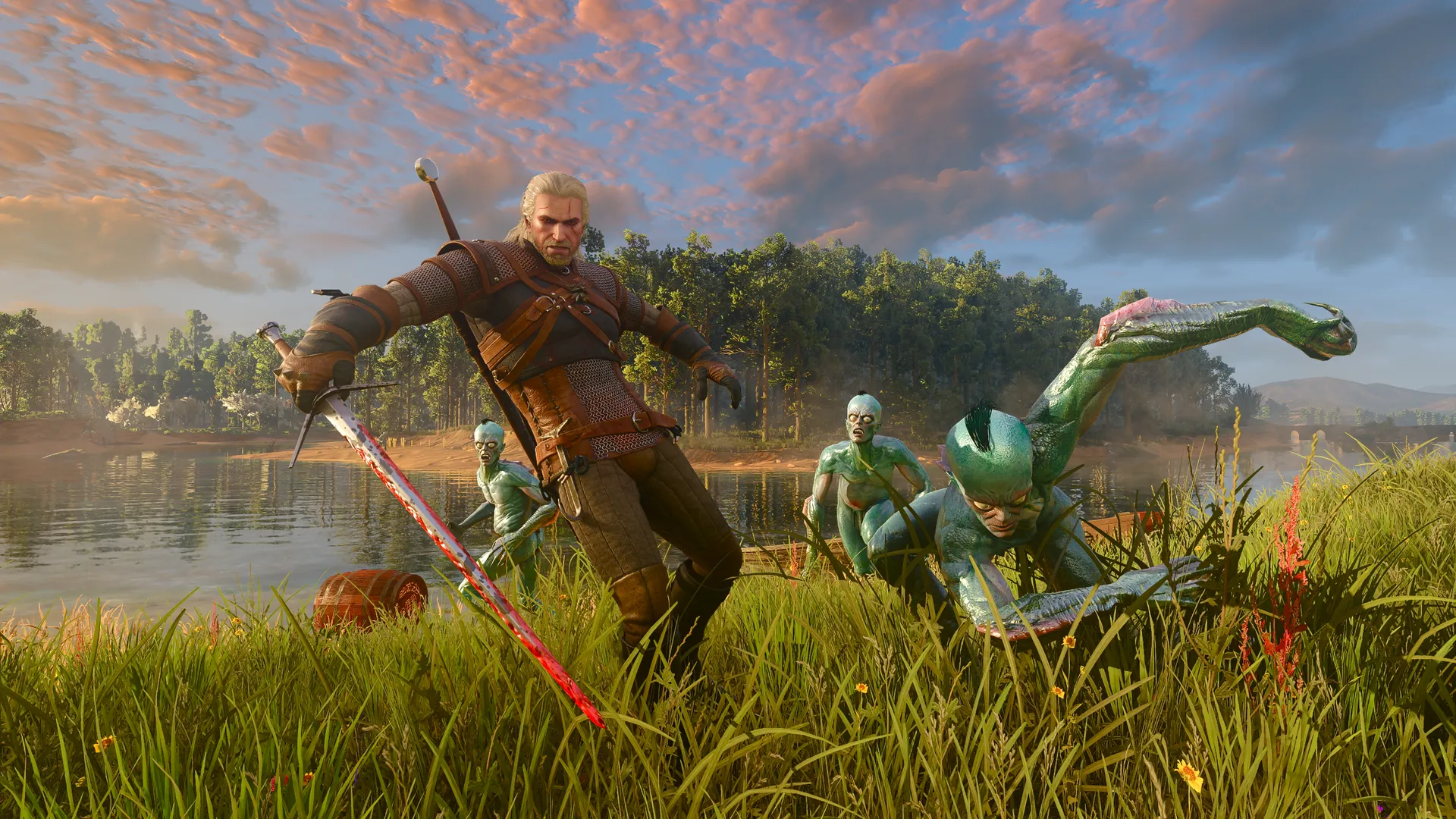
The visual overhaul in The Witcher 3 Remastered focuses on bringing the world of Geralt of Rivia up to 21st-century graphical standards. Rather than a complete engine rebuild, the update acts as a high-fidelity polish that enhances existing environments. Players can observe significant improvements in the skybox during sunsets and the way light interacts with environmental details, such as the subtle play of light through textures and character models.
The atmosphere of the game—from the oppressive landscapes of the early regions to the icy, serene vistas of Skellige—remains intact but feels more defined. The remaster ensures that the world feels as vibrant and detailed as modern titles while preserving the specific aesthetic identity that made the 2015 original a masterpiece. The goal appears to be a sense of familiarity that has been 'aired out' and polished, making the world feel fresh without losing its soul. It is less about changing the world and more about finding it in a cleaner, more vibrant state, much like returning to a childhood home that has been well-maintained in your absence.
Atmospheric Lighting and Environment
The lighting engine has been tuned to provide more realistic light scattering and shadow depth. This is particularly noticeable in natural environments where sunlight filters through foliage or reflects off water. These changes help ground the fantasy elements in a more believable reality, making the transition between different geographical regions feel more seamless and visually rewarding. The experience of walking through the streets of the main city or the icy reaches of Skellige—which acts as a sort of visual therapy after the tension of the earlier regions—is heightened by these environmental refinements.
This environmental depth is crucial to the emotional resonance of the game. For many, the world of The Witcher 3 is a fixed space in the mind, filled with personal myths and legends played out in specific corners of its map. By enhancing the way light hits a patch of pavement or how a sunset fills the skybox, the remaster reinforces the sense of place. The icy clarity of Skellige, arriving toward the end of the journey, benefits immensely from these updates, providing a crisp, clean visual contrast to the more oppressive territories encountered in the opening hours of the adventure.
What quality-of-life improvements are included in the remaster?
Quality-of-life (QoL) updates serve as the backbone of this remaster, addressing long-standing player frustrations regarding navigation and information density. CD Projekt Red has implemented several mechanical tweaks designed to smooth the player's journey through the massive open world. These changes are intended to reduce friction during questing, allowing players to focus more on the narrative and exploration.
Key improvements include:
- Enhanced Map Navigation: Players can now view all active quest objectives directly on the world map, eliminating the need for constant menu toggling.
- Streamlined Quest Switching: A new mechanic allows players to flip between focused quests and their specific objectives with a simple press of a gamepad trigger.
- HUD De-cluttering: The Head-Up Display has been redesigned to be less intrusive, providing necessary information without obscuring the beautiful vistas.
- New Loot Feed: A dedicated notification system now informs players exactly what items they have acquired during dialogue or quest completions, solving the ambiguity of receiving unnamed rewards.
These additions address the practicalities of playing a massive RPG. In the original, players often found themselves in situations where a character would say, "Here, take this," without clearly identifying the item. The new loot feed removes this ambiguity, providing immediate clarity. By smoothing out these minor points of friction, the remaster allows the player to remain immersed in the world rather than being pulled out by technical or navigational hurdles.
Has the combat system been fundamentally changed?
The combat mechanics in The Witcher 3 Remastered have undergone 'fiddling' to reduce the perceived 'jank' present in the original release. While CD Projekt Red has attempted to sand down some of the rougher edges of swordplay and sign-casting, the core DNA of the combat remains the same. This is a deliberate choice to ensure the game still feels like The Witcher 3.
For players who found the combat clunky in 2015, the remaster offers a slightly more responsive experience, but it is not a total mechanical overhaul. It is an incremental improvement rather than a revolutionary shift. The developers seem to have balanced the desire for 2026-era mechanical fluidity with the necessity of maintaining the game's established identity. If the original combat was a barrier to entry, the remaster provides a smoother path, but it will not convert those who fundamentally disliked the original's rhythmic style. The goal was not to reinvent the wheel, but to ensure the wheel turns more smoothly within the existing framework of the game.
What is the future roadmap for The Witcher 3?
The release of The Witcher 3 Remastered is not an end point but a bridge to future content. CD Projekt Red has confirmed that a brand-new expansion, titled Songs of the Past, is currently scheduled to arrive in 2027. This expansion represents a significant addition to the existing lore and gameplay experience, offering a reason for veteran players to engage with the remastered world once again.
To prepare for this upcoming content, the developers have made the two original expansions free to access. This move encourages both new players and returning fans to complete the main story and existing DLCs, ensuring they have a fresh, 100%-complete save file ready for the 2027 release. The remaster effectively restarts the lifecycle of the franchise, blending nostalgia with new narrative opportunities. For players looking to dive back in, this provides an excellent excuse to revisit Geralt's journey, especially with the added benefit of a polished world and free access to the previous expansions.
Frequently asked questions
Is The Witcher 3 Remastered a full remake?
No, it is a remaster rather than a full remake. The update focuses on enhancing existing assets, improving lighting, and adding quality-of-life features to bring the game closer to modern graphical and mechanical standards without rebuilding the entire game from scratch.
What is the new Songs of the Past DLC?
Songs of the Past is a brand-new expansion for The Witcher 3 that is scheduled for release in 2027. It is intended to provide new story content and gameplay experiences, building upon the foundation of the remastered base game and previous expansions.
Are the original expansions included?
Yes, the two original expansions are currently available for free. This allows players to experience the full breadth of the Witcher's journey and prepare their save files for the upcoming Songs of the Past expansion arriving in 2027.
Does the remaster change the difficulty of combat?
The remaster does not fundamentally change the difficulty levels, but it does include minor adjustments to combat mechanics to reduce 'jank.' These changes aim to make swordplay and sign-casting feel smoother and more responsive without altering the core combat identity.
Can I use my old save files?
While the remaster is designed to be compatible with the spirit of the original, players are encouraged to create new, 100%-complete save files to ensure full compatibility and the best experience when the Songs of the Past DLC arrives in 2027.
Key takeaways
- The Witcher 3 Remastered features significant graphical enhancements to lighting and environmental textures.
- New quality-of-life features include a de-cluttered HUD and improved quest tracking on the map.
- A new loot feed clarifies exactly what items are received during quest completion.
- The Songs of the Past expansion is officially scheduled for a 2027 release.
- Original game expansions are currently available for free to facilitate player progression.
Conclusion
The Witcher 3 Remastered succeeds by treating the original masterpiece with respect rather than attempting to reinvent it. By focusing on visual polish, improved navigation, and much-needed quality-of-life updates, CD Projekt Red has created a version of the game that feels contemporary without losing its essential character. It serves as both a nostalgic homecoming for long-time fans and a refined entry point for new players. With the promise of the Songs of the Past expansion in 2027, the legend of Geralt of Rivia continues to evolve, ensuring that the world of The Witcher remains as relevant in the mid-2020s as it was in 2015.


