
Why is the 'chosen one' trope so prevalent in modern RPGs?
The prevalence of the 'chosen one' narrative stems from a reliance on established, predictable gameplay loops that offer immediate gratification. Martin Klima, co-founder of Warhorse Studios, suggests that these stories often serve as straightforward power fantasies where the player is granted immense importance and cosmic responsibility from the outset. While Klima notes that there is nothing inherently wrong with the concept of a power fantasy, he expresses fatigue with how frequently it is utilized to drive game progression.
This repetition often follows a specific pattern: a protagonist is selected by destiny, tasked with defeating a dark lord, and engages in romantic subplots to round out the experience. Klima argues that this formula has become a distillation of the genre, much like the satirical idler game Progress Quest once lampooned the repetitive nature of titles like EverQuest. By stripping away the nuance of a character's struggle, these games become 'Skinner boxes'—systems designed to keep players engaged through repetitive rewards rather than meaningful narrative growth.
The psychological draw of the power fantasy
The appeal of being a hero with predetermined greatness lies in its accessibility. For many players, especially younger ones, the ability to step into a role of absolute significance provides an escape that requires little emotional or intellectual heavy lifting. However, as the gaming demographic shifts, this approach risks alienating players who seek more grounded, human-centric stories.
How does the target demographic influence game design?
Game design is frequently dictated by the perceived interests of the largest consumer segments, which Klima believes leads to a focus on 'games for teenagers.' He posits that players in the 16 to 17 age bracket are often the primary consumers of these high-octane power fantasies because the genre fulfills a specific developmental desire for agency and impact. However, the broader gaming audience has aged significantly, creating a disconnect between what is being produced and what an older demographic might desire.
Klima's observation suggests that while the industry continues to churn out titles centered on adolescent escapism, there is a growing, underserved market of adult players. These players may find the 'save the universe' stakes to be disconnected from reality or simply uninteresting. This demographic gap presents a significant opportunity for studios that are willing to pivot toward more complex, character-driven narratives that do not rely on the protagonist being a cosmic savior.
What role do major publishers play in genre stagnation?
Publishers are a primary driver of the industry's tendency to recycle successful formulas rather than taking creative risks. According to Klima, companies are most proficient at iterating on existing templates, which ensures a level of financial predictability but stifles innovation. He specifically points to the design philosophies seen in large-scale productions from companies like Ubisoft as an example of this trend.
Klima notes that while many of these titles are highly polished, they often suffer from a lack of novelty. He cites the evolution of series such as Assassin's Creed, Far Cry, and Watch Dogs to illustrate this point. While the initial iterations of these franchises were widely praised for their fun and engaging mechanics, the subsequent entries often feel like variations of a theme. This cycle of 'recycling the same formula over and over' creates a landscape where technical excellence often masks a lack of creative depth.
The technical vs. creative dilemma
A significant challenge in modern AAA development is the gap between technical polish and narrative innovation. Large publishers possess the resources to create breathtaking worlds, but those resources are often directed toward refining existing mechanics rather than inventing new ones.
| Aspect of Development | Publisher Focus (Typical) | Klima's Preferred Approach |
|---|---|---|
| Technical Execution | High (Bug-free, polished animations) | High (Essential for immersion) |
| Narrative Structure | Formulaic (The 'Chosen One') | Innovative (Grounded, human-scale) |
| Risk Management | Low (Recycling proven formulas) | Medium/High (Experimenting with new ideas) |
| Player Agency | Power Fantasy (Destiny-driven) | Realistic (Consequence-driven) |
How did the desire for change lead to Kingdom Come: Deliverance?
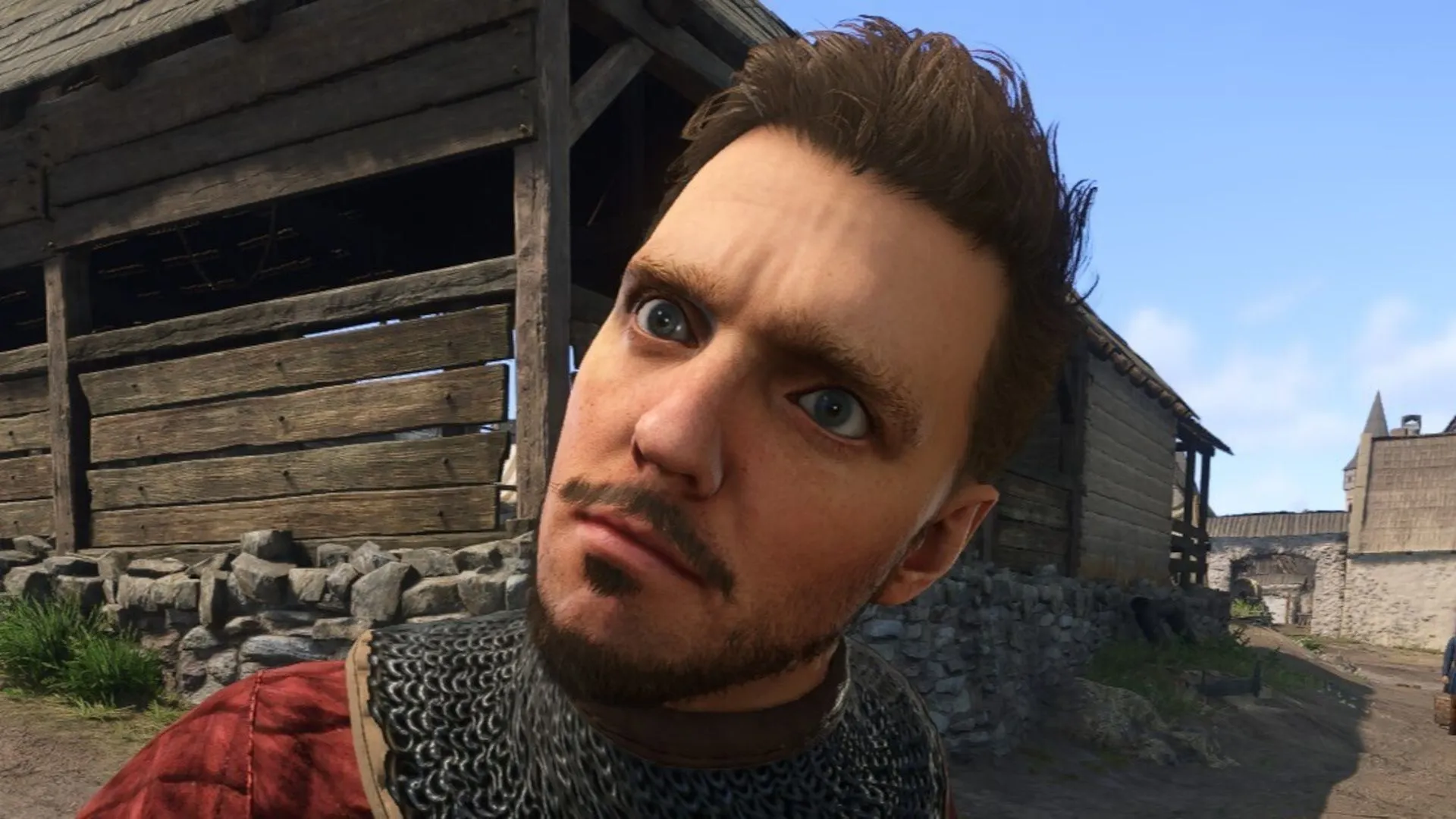
The creation of Kingdom Come: Deliverance (KCD) was a direct response to the boredom and fatigue Klima felt toward the standard RPG template. Rather than following the path of the cosmic hero, Warhorse Studios sought to develop a game that felt more authentic and less reliant on fantastical tropes. The 'seedling' of KCD was the realization that a significant portion of the gaming community was also tired of the repetitive 'chosen one' narrative.
By focusing on a more grounded historical setting and a protagonist who is not inherently special, KCD attempted to offer a different kind of immersion. This approach moves away from the 'Skinner box' mechanics of traditional RPGs and instead focuses on the struggles of an individual within a realistic historical context. This shift in perspective was intended to capture the interest of those players who had outgrown the traditional power fantasy.
What are the risks of moving away from proven formulas?
Transitioning away from established tropes carries immense financial risk, particularly for large-scale studios. Klima acknowledges the 'dilemma' faced by major publishers, noting that the massive budgets required for flagship titles make experimentation a dangerous proposition. When a company spends hundreds of millions of dollars on a project, the pressure to deliver a guaranteed return often outweighs the desire to innovate.
This financial reality creates a cycle where innovation is often relegated to smaller, independent studios, while the mainstream market remains dominated by safe, iterative sequels. For a studio to break this cycle, it must find a way to balance high-quality craftsmanship with genuine creative risk—a feat that is difficult to achieve when the cost of failure is so high. This tension between artistic ambition and commercial necessity remains one of the most significant hurdles in the modern gaming industry.
Frequently asked questions
What is a 'power fantasy' in gaming?
A power fantasy is a genre or narrative trope where the player character is granted extraordinary abilities, importance, or influence. These games allow players to feel immensely powerful, often through a 'chosen one' narrative that justifies their rapid ascent from an ordinary person to a world-saving hero.
Why does Martin Klima criticize Ubisoft's game design?
Klima does not criticize the technical quality of Ubisoft's games, which he describes as excellent and polished. Instead, he critiques their tendency to recycle the same gameplay formulas, arguing that their high level of craftsmanship would be better utilized if applied to more innovative and less repetitive concepts.
How does Kingdom Come: Deliverance differ from typical RPGs?
Kingdom Come: Deliverance avoids the 'chosen one' trope by focusing on a more grounded, realistic historical experience. Instead of being a cosmic savior, the protagonist's journey is defined by more human-scale struggles, providing an alternative to the repetitive power fantasies common in the genre.
Why are publishers hesitant to innovate?
Publishers are often hesitant to innovate because of the high financial stakes involved in modern game development. Using proven formulas reduces the risk of commercial failure, making it a safer bet for stakeholders, even if it results in a lack of creativity and genre stagnation.
Is the 'chosen one' trope only for younger players?
According to Klima, the trope is particularly popular with 16 to 17-year-olds who seek the agency provided by power fantasies. However, he argues that the broader gaming audience is much older and is increasingly looking for more mature, nuanced, and innovative storytelling experiences.
Key takeaways
- Martin Klima argues that many modern RPGs rely too heavily on repetitive 'chosen one' power fantasies.
- The gaming demographic is aging, creating a gap between older players and 'teenager-focused' game designs.
- Large publishers often prioritize financial safety by recycling proven formulas over seeking innovation.
- Kingdom Come: Deliverance was developed as a direct alternative to traditional, trope-heavy RPG narratives.
The future of RPG storytelling
The tension between commercial safety and creative evolution defines the current state of the RPG genre. While the 'chosen one' narrative remains a reliable way to engage younger audiences and ensure predictable returns, the growing maturity of the player base suggests a shifting tide. As studios like Warhorse continue to prove that grounded, non-traditional narratives can find success, the industry may eventually move past the era of repetitive power fantasies toward more diverse and intellectually engaging role-playing experiences.


