Why is gaming mouse technology becoming so expensive in 2026?
The rising cost of premium peripherals is directly linked to the heavy investment required for proprietary hardware breakthroughs. While niche manufacturers, such as China's Mchose, have successfully produced high-performance 'clones' like the $89 K7 V2 Ultra+ that rival flagship models, they often focus on refining existing designs rather than inventing new ones.
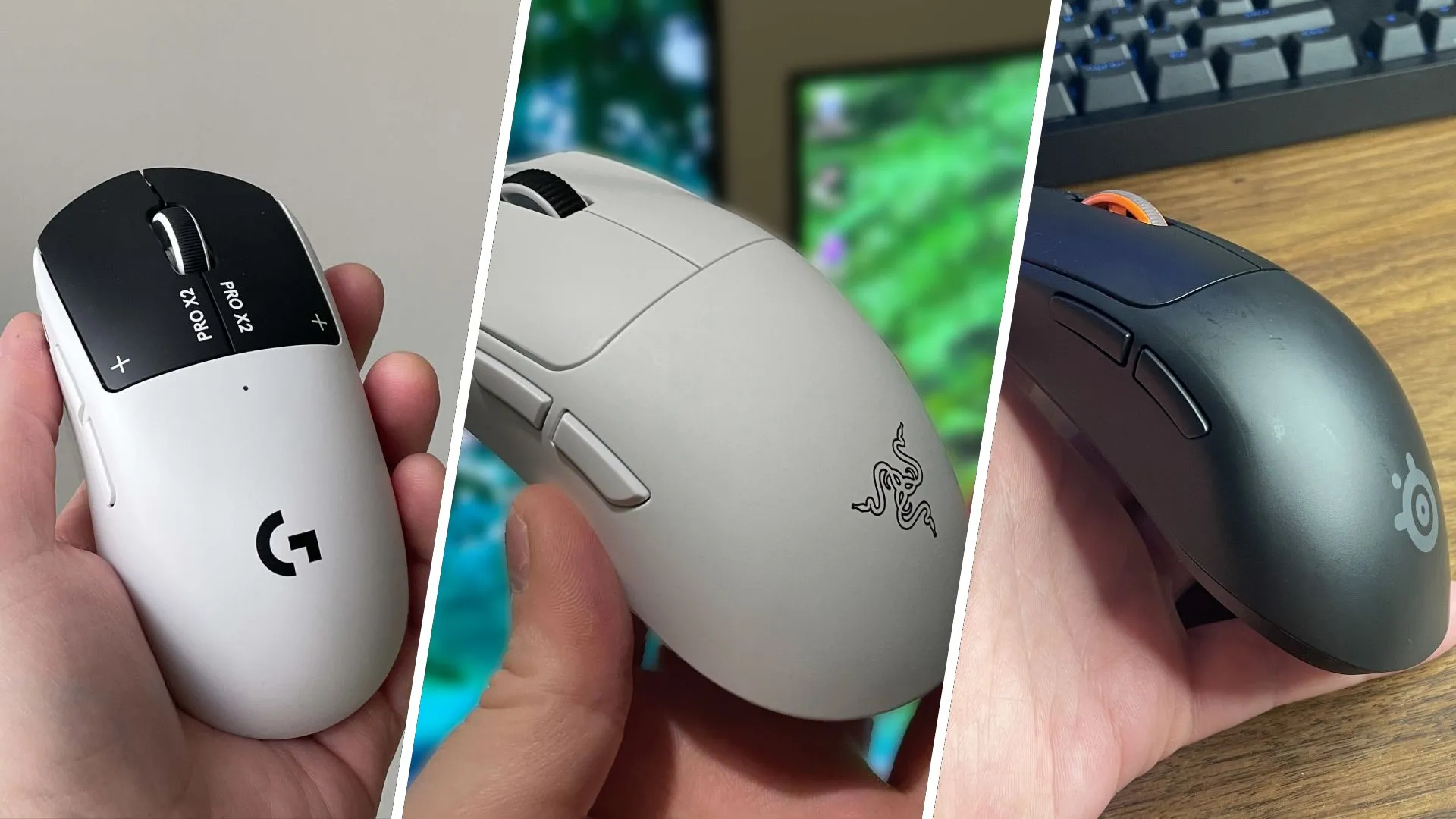
Major brands like Logitech, Razer, and SteelSeries are currently charging premium prices—often between $160 and $200—to recoup the costs of significant R&D. These companies are taking the financial risk to develop entirely new interaction methods and connectivity standards. This investment serves two purposes: it provides a unique selling point that niche brands cannot replicate, and it provides a 'stamp of legitimacy' through massive marketing campaigns. Once these technologies are proven viable in flagship models, they typically trickle down to the rest of the industry as component manufacturers begin to integrate similar features into standard parts.
How is Logitech's HITS technology changing mouse clicks?
Logitech has introduced a paradigm shift in tactile feedback through its Haptic Inductive Trigger System (HITS), which moves away from traditional mechanical switches toward analogue actuation. This technology allows users to customize exactly where the mouse button registers a click, effectively shortening the delay between intention and action.
The HITS system provides two primary advantages for competitive players:
- Adjustable Actuation: Users can change the depth required to trigger a click, allowing for a highly personalized response curve.
- Rapid Trigger Functionality: Similar to advanced keyboard technology, this allows a player to re-click a button the moment they begin to lift their finger, rather than waiting for the switch to reset.
To maintain a consistent user experience, Logitech utilizes haptics to ensure the player still feels a definitive 'click' sensation, regardless of where the electronic actuation point is set. While competitors like Keychron are developing switches that allow users to toggle between optical and magnetic types, Logitech's approach is more dynamic, offering real-time adjustment of the actuation point itself.
The evolution of analogue switches
The move toward analogue clicks represents a departure from the binary 'on/off' nature of traditional mechanical switches. By using induction and haptics, Logitech is attempting to bridge the gap between digital precision and human tactile expectation. This technology is already being explored by niche players like Finalmouse, who have showcased TMR (Tunnel Magnetoresistance) analogue clicks, suggesting that the industry is moving toward a future where the 'click' is a software-defined event rather than a purely mechanical one.
What is Razer's FrameSync and how does it affect battery life?
Razer has addressed the conflict between high-performance polling and battery longevity by introducing FrameSync, a technology that synchronizes the mouse sensor's data capture with the system's polling cycles. This innovation functions similarly to Variable Refresh Rate (VRR) technology used in high-end gaming monitors.
In a standard gaming mouse, the sensor frequently takes snapshots of the surface to ensure responsiveness. FrameSync optimizes this process by ensuring the sensor's optical capture is perfectly timed with the Microcontroller Unit (MCU) when it receives a request from the PC. This synchronization offers several technical benefits:
- Reduced Redundancy: Fewer sensor snapshots are required to maintain high-level responsiveness because the data is captured exactly when it is needed.
- Extended Battery Life: By reducing the frequency of unnecessary sensor operations, the Razer Viper V4 Pro can achieve up to 180 hours of battery life at a 1 kHz polling rate.
- Improved Data Flow: The technology helps minimize potential latency and jitter by streamlining the hand-off between the sensor and the PC.
While some argue that modern high-end sensors already handle latency and jitter effectively, the primary victory for FrameSync is efficiency. It allows professional-grade performance without the traditional trade-off of frequent charging cycles.
How are SteelSeries and UWB improving wireless reliability?
SteelSeries has entered the 2026 innovation cycle by focusing on connectivity stability and data transmission efficiency through Ultra-Wideband (UWB) technology and 'true' 8K polling. While these advancements may seem less radical than analogue clicks, they address the fundamental requirement of competitive gaming: a flawless wireless connection.
The implementation of UWB allows the mouse to communicate with its wireless dongle across different frequency bands than standard wireless protocols. This creates a more robust link that is less susceptible to interference. Furthermore, SteelSeries' approach to high polling rates differs from previous generations. Their 'true' 8K polling ensures that the device does not bundle multiple data points into a single packet; instead, it sends one distinct packet for every single receipt, ensuring maximum granularity in movement data.
Comparing connectivity standards
The introduction of UWB and optimized 8K polling places SteelSeries in a specialized tier of wireless technology. While niche Japanese brand Elecom has also explored UWB, the scale of SteelSeries' implementation provides a more accessible standard for the broader gaming community. Additionally, their ability to decouple sensor polling rates from click polling rates offers further customization, though the industry consensus remains that sensor polling remains the most critical factor for high-level precision.
Key takeaways
- Logitech's HITS technology enables adjustable analogue actuation and rapid trigger functionality.
- Razer's FrameSync optimizes sensor snapshots to extend battery life up to 180 hours.
- SteelSeries utilizes Ultra-Wideband (UWB) to provide more stable wireless connectivity.
- High-end gaming mice prices are rising due to significant R&D costs for proprietary tech.
- Big brands act as industry pioneers, with new technologies eventually trickling down to cheaper models.
FAQ: Gaming Mouse Technology
What is the benefit of analogue mouse clicks?
Analogue clicks allow players to customize the actuation point of their mouse buttons. This means you can trigger a click with less physical movement, enabling faster response times and features like 'rapid trigger,' which allows for much quicker repeated clicks during intense gameplay.
How does FrameSync improve a gaming mouse?
FrameSync synchronizes the mouse sensor's data capture with the computer's polling requests. This reduces the number of unnecessary sensor snapshots required, which significantly extends the battery life of high-performance mice without sacrificing the responsiveness required for competitive gaming.
Why are flagship gaming mice so expensive in 2026?
The high cost is primarily due to the massive research and development investments made by major brands. Companies like Logitech and Razer are creating entirely new hardware technologies, such as haptic clicks and synced sensors, which require significant capital to develop and market.
What is Ultra-Wideband (UWB) in gaming mice?
UWB is a wireless technology that allows a mouse to connect to its dongle using different frequency bands than standard wireless connections. This provides a more stable and reliable wireless link, reducing the risk of interference during competitive matches.
Does high polling rate always mean better performance?
While high polling rates (like 8K) provide more frequent data updates, the quality of that data matters. SteelSeries' 'true' 8K focuses on sending individual packets rather than bundled data, ensuring that the high frequency results in actual precision rather than just more data points.
Conclusion
The landscape of gaming mouse technology in 2026 is defined by a shift from incremental hardware refinements to fundamental architectural innovations. While the high price tags of Logitech, Razer, and SteelSeries products may be a barrier for many, these companies are effectively serving as the industry's R&D engines. By absorbing the risks of developing technologies like HITS, FrameSync, and UWB, they are establishing new standards for performance and efficiency. As these technologies mature and move into more affordable components, the entire gaming peripheral market will benefit from a higher baseline of capability.