What makes the DJI Osmo Pocket 3 unique for creators?
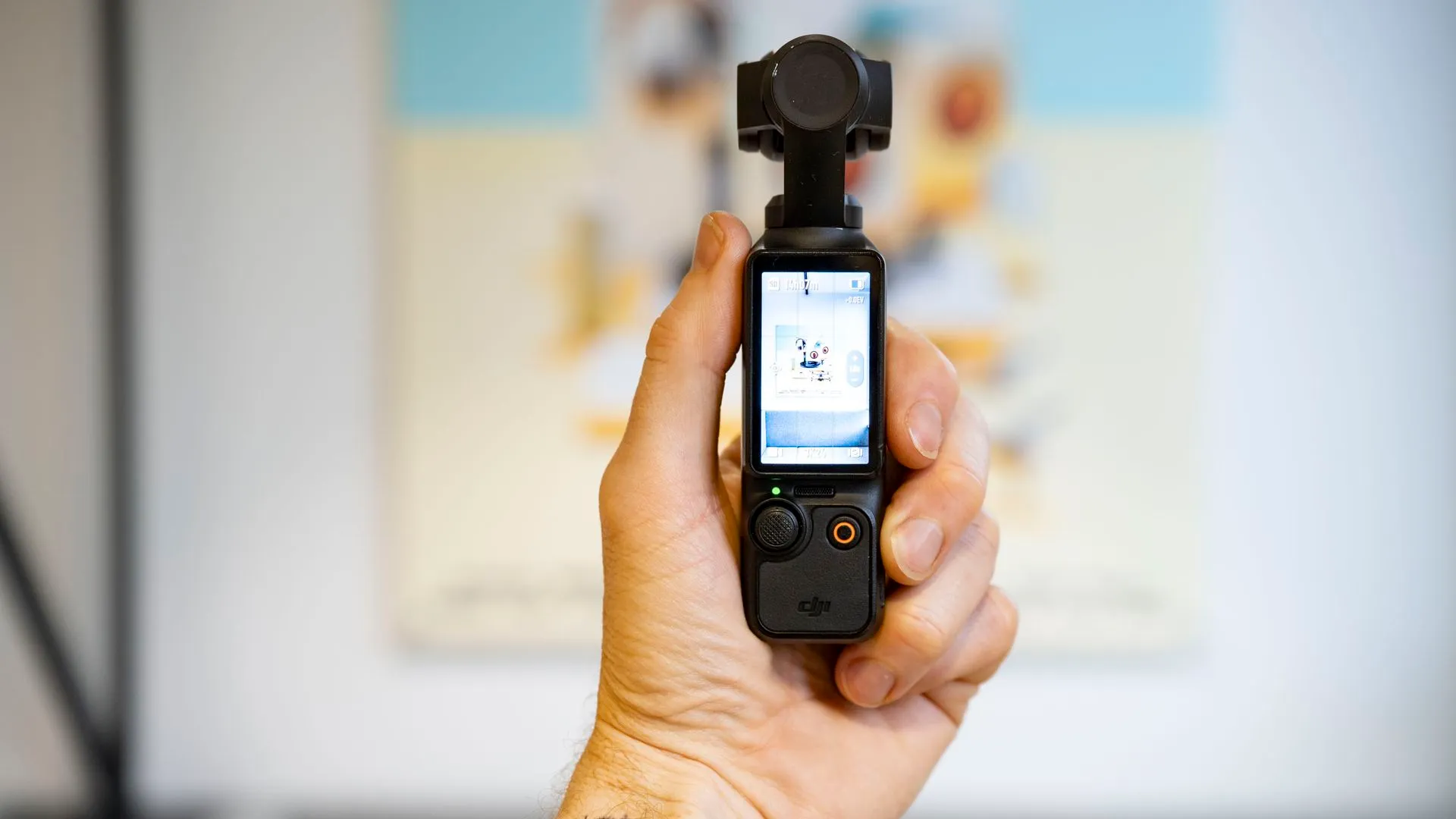
The DJI Osmo Pocket 3 distinguishes itself through its specialized integration of a high-quality sensor and mechanical stabilization in a pocket-sized form factor. Unlike standard action cameras that rely on electronic stabilization, this device utilizes a physical three-axis gimbal to maintain steady footage. This hardware-level stabilization is designed to counteract the shakes typically associated with walking, running, or handheld vlogging.
At the heart of its imaging capabilities is a 1-inch CMOS sensor. According to TechRadar's expert Paul, this sensor represents a major evolution for the Pocket series, providing enhanced image quality for both photography and video. The larger sensor size specifically improves low-light performance and allows for higher-resolution capabilities when shooting in slow-motion modes. By moving to a 1-inch sensor, DJI has addressed one of the primary limitations of previous compact cameras, ensuring that creators can produce high-quality content even when lighting conditions are not ideal.
The advantage of mechanical stabilization over electronic methods
While many modern smartphones and action cameras use Electronic Image Stabilization (EIS), the Osmo Pocket 3 employs a mechanical three-axis gimbal. This distinction is critical for professional-looking footage. Mechanical stabilization physically moves the camera to compensate for hand movements, preserving the full field of view and preventing the 'warping' effect often seen in heavily cropped electronic stabilization.
For travelers and vloggers who move constantly, this ensures that the subject remains centered and the background remains smooth without losing image detail. Because the stabilization is physical rather than software-based, the camera can handle the complexities of walking or following a subject with a level of fluid motion that mimics a much larger, more expensive camera setup. This makes it a dedicated tool for those who need to capture stable video while remaining mobile.
What are the key technical specifications of the device?
The DJI Osmo Pocket 3 is engineered to provide professional-grade video features within a consumer-friendly interface. Its primary technical strengths include high frame rate recording and advanced color depth, which allow for significant post-production flexibility.
- Sensor: 1-inch CMOS sensor for improved low-light and detail.
- Video Resolution: 4K recording at up to 120fps for cinematic slow motion.
- Stabilization: Three-axis mechanical gimbal.
- Display: A rotating 2-inch OLED touchscreen for intuitive control.
- Color Science: 10-bit color and D-Log M support for professional grading.
- Tracking: ActiveTrack 6.0 technology for automated subject following.
- Audio: Stereo audio capabilities.
- Storage: microSD storage support.
The inclusion of 10-bit color is particularly important for users who intend to color grade their footage. By capturing more color information, the camera allows creators to adjust highlights, shadows, and saturation without the banding or degradation common in 8-bit files. Furthermore, the ability to record 4K video at 120fps enables the creation of ultra-smooth slow-motion sequences that retain high levels of clarity, providing a cinematic quality that is often difficult to achieve with standard handheld devices.
How does the current price compare to historical values?
The current discount at Best Buy brings the price of the DJI Osmo Pocket 3 to $395, which is a $44 reduction from its standard $439 retail price. This represents a 10% saving for consumers. While this is a strong promotional price, it is not the absolute lowest the device has reached in the market.
Historical data indicates that the Osmo Pocket 3 has previously been available for approximately $378 at other retailers. However, a price point of $395 remains highly competitive, especially for those looking to acquire the device through a major retailer. For creators on a budget, this discount bridges the gap between entry-level action cameras and more expensive professional setups, making high-end features like the 1-inch sensor and mechanical gimbal more accessible.
Who should buy the DJI Osmo Pocket 3 and who should skip it?
Deciding whether to invest in the DJI Osmo Pocket 3 depends heavily on your primary content type and existing gear. The camera is purpose-built for motion, making it an excellent choice for specific user groups while being less ideal for others.
Target Audience: The ideal users
The Osmo Pocket 3 is best suited for travelers, vloggers, and creators who prioritize mobility. If your workflow involves capturing family events, travel documentaries, or vlogs while on the move, this camera provides a dedicated video solution that is more capable than a smartphone but far less cumbersome than a full-sized mirrorless camera with a separate gimbal. The ActiveTrack 6.0 feature is a significant benefit for solo creators, as it allows the camera to automatically follow a subject, acting as a virtual cameraman and ensuring the action stays in frame without manual intervention.
When to consider other options
Conversely, there are scenarios where the Osmo Pocket 3 may not be the optimal investment. If your primary focus is still photography, a dedicated mirrorless or even a high-end smartphone might offer better versatility. Additionally, if you only require a camera for occasional, low-stakes video recording, the specialized features of the Pocket 3—such as the 10-bit color and mechanical gimbal—might represent unnecessary expenditure compared to a standard, inexpensive action camera. The device is a specialized tool; if your needs are general rather than video-centric, other options may serve you better.
Frequently asked questions
Is the DJI Osmo Pocket 3 good for low-light video?
Yes, the DJI Osmo Pocket 3 is specifically designed to perform well in challenging lighting. The integration of a 1-inch CMOS sensor is a significant upgrade that provides much better low-light capabilities and image clarity compared to previous, smaller-sensor models in the Pocket line.
Can I use the DJI Osmo Pocket 3 for professional color grading?
The camera supports 10-bit color and D-Log M, which provides the high dynamic range and color depth necessary for professional post-production. This allows creators to manipulate colors and exposure more effectively during the editing process without losing image quality.
Does the camera track subjects automatically?
Yes, the device features ActiveTrack 6.0 technology. This system allows the three-axis gimbal to physically move and keep a selected subject in the frame, which is particularly useful for vloggers filming themselves or capturing moving subjects without a dedicated operator.
What is the main difference between this and a standard action camera?
The primary difference is the three-axis mechanical stabilization. While most action cameras use electronic stabilization that crops the image, the Osmo Pocket 3 uses a physical gimbal to stabilize the sensor, resulting in smoother footage and a wider field of view.
Is the screen easy to use for filming?
The Osmo Pocket 3 features a unique rotating 2-inch OLED touchscreen. This design allows users to quickly switch between horizontal and vertical shooting modes, making it highly versatile for both traditional video and social media formats.
Key takeaways
- The DJI Osmo Pocket 3 is currently discounted to $395, a 10% saving from its $439 retail price.
- A 1-inch CMOS sensor provides superior low-light performance and higher-resolution slow-motion video.
- Three-axis mechanical stabilization ensures smooth handheld footage without the warping of electronic methods.
- Professional features like 10-bit color and D-Log M allow for advanced color grading in post-production.
- The device is ideal for vloggers and travelers but may not suit those focused primarily on photography.
Conclusion
The DJI Osmo Pocket 3 represents a specialized intersection of portability and professional video capability. By combining a large 1-inch sensor with mechanical gimbal stabilization, DJI has created a tool that solves the specific challenges of mobile content creation. While the current $395 price point is not the historical absolute low, it offers a compelling entry point for creators seeking more control than a smartphone provides. Ultimately, its value is defined by its ability to deliver high-quality 4K/120fps footage in a package that fits in a pocket, making it a standout choice for the modern vlogger.