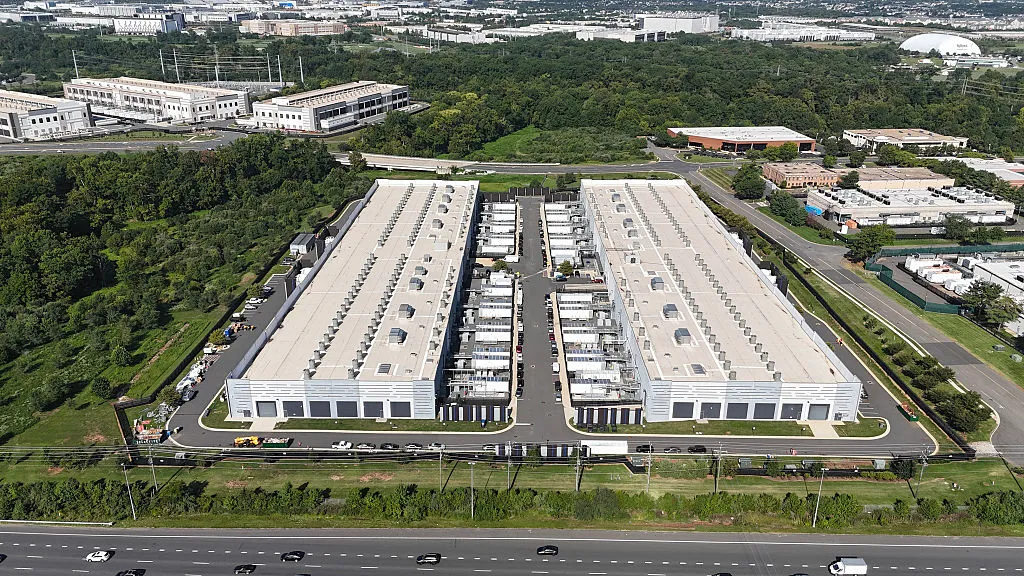
What is Amazon's $1 billion community investment plan?
Amazon has committed to spending more than $1 billion over a five-year period to assist communities located near its data center operations. This initiative is designed to address local concerns regarding the rapid expansion of digital infrastructure. According to AWS CEO Matt Garman, the funds will be directed toward several key pillars, including education, vocational training, energy affordability, water management, and energy preservation. Crucially, the company has stated that local communities will maintain the authority to prioritize how these funds are distributed within their specific jurisdictions.
Beyond direct financial donations, Amazon has made several operational promises to mitigate the local impact of its facilities. The company has pledged to ensure that its data centers do not lead to increased electricity costs for residents or the depletion of local water supplies. A central component of this strategy is Amazon's goal to become "water positive" by 2030, a milestone the company claims that 75 percent of its existing projects have already achieved.
The scope of community funding
The $1 billion commitment is intended to act as a social license to operate in regions where data center growth has met significant resistance. By focusing on "local priorities," Amazon seeks to integrate its infrastructure more smoothly into the existing social fabric of host communities. However, the scale of this investment is being heavily scrutinized when compared to the company's broader capital expenditures.
Why are environmental advocates criticizing the plan?
Environmental groups, most notably the global nonprofit Stand.Earth, have characterized Amazon's proposal as a "flailing attempt at damage control" rather than a genuine commitment to sustainability. The core of the criticism lies in the perceived gap between Amazon's community promises and the actual environmental consequences of its infrastructure build-out. Critics argue that the $1 billion investment is a "drop in the bucket" when measured against the massive scale of Amazon's industrial activities.
Stand.Earth highlights a significant discrepancy in the company's financial disclosures. While Amazon has pledged $1 billion over five years for community support, the company is projected to invest approximately $220 billion in data centers in 2026 alone. This massive disparity leads advocates to suggest that the community fund is a minimal-cost strategy to continue exploiting local resources without addressing the fundamental harms caused by rapid expansion.
How does the Pecos, Texas power plant affect the debate?
A major point of contention in the Amazon data center backlash involves a specific energy project in Pecos, Texas, which critics say is being omitted from the company's sustainability narrative. Stand.Earth has pointed out that while Amazon emphasizes its investments in carbon-free energy, it is simultaneously involved in constructing a power plant that experts expect to become the largest source of climate pollution in the United States.
The environmental implications of this project are substantial. According to Stand.Earth, the power plant is expected to produce 33 million tons of harmful air pollution annually. To put the scale of this energy consumption into perspective, the plant is estimated to require an amount of energy equivalent to what is needed to power more than 1.9 million homes. Critics argue that Amazon's community commitments fail to address this specific, massive source of emissions, focusing instead on smaller-scale issues like backup generator usage.
The controversy over backup generators
Amazon has attempted to address concerns regarding air pollution by stating that its data centers rely on backup generators that utilize the lowest possible emission technologies. The company further claims that these generators are largely idle, running for roughly 10 hours per year. However, Stand.Earth has challenged this narrative, citing specific instances where Amazon data centers reportedly operated on diesel backup power for several consecutive days, contradicting the "idle" characterization.
What are the transparency and water usage concerns?
One area where Amazon has received some recognition is its decision to end the use of nondisclosure agreements (NDAs) when constructing new data centers. Stand.Earth noted that this move could improve transparency and allow for better public oversight of new projects. However, even this positive step is viewed as insufficient to address the broader environmental risks associated with modern data center technology.
Water usage remains a critical flashpoint in the discussion. While Amazon promises to replace the water used by its data centers, advocates argue this does not account for the indirect water footprint of the energy infrastructure required to power these facilities. Furthermore, there are growing concerns regarding the potential for "forever-chemical" contamination resulting from the use of nascent cooling technologies. These complex environmental impacts are often left out of the company's high-level community engagement summaries.
How does the geopolitical context influence Amazon's stance?
Amazon's leadership has framed the data center expansion not just as a business necessity, but as a matter of national security and global competitiveness. AWS CEO Matt Garman has echoed sentiments similar to those expressed by Donald Trump, suggesting that foreign disinformation campaigns may be fueling the protests against data center development. Garman has argued that calls for moratoriums on data center construction could cause the United States to fall behind China in the race for artificial intelligence supremacy.
By framing the backlash as a potential threat to "American frontier AI," Amazon is positioning its expansion as a patriotic necessity. Garman has suggested that international rivals are attempting to "trick" the U.S. into slowing down its technological progress. This rhetorical strategy aims to shift the conversation from local environmental and social impacts to a broader geopolitical struggle, suggesting that the costs of data center development are a necessary trade-off for maintaining technological leadership.
FAQ: Amazon data center backlash
What is Amazon's goal for water usage?
Amazon has pledged to become "water positive" by the year 2030. This means the company intends to return more water to local communities and ecosystems than it consumes for its data center operations. The company claims that 75 percent of its current projects have already met this standard.
How much is Amazon investing in communities?
Amazon has committed to donating more than $1 billion over the next five years to communities located near its data centers. These funds are intended to support local priorities such as education, job training, energy affordability, and water preservation, with local leaders deciding how to allocate the money.
Why is Stand.Earth criticizing Amazon?
Stand.Earth argues that Amazon's $1 billion plan is insufficient given the company's $220 billion investment in data centers in 2026. They claim the plan is an attempt at "damage control" that fails to address major issues like the massive pollution from the Pecos, Texas power plant and indirect water usage.
Does Amazon use diesel generators?
Amazon states that its backup generators are designed to use the lowest possible emission technologies and typically only run for about 10 hours per year. However, environmental advocates have challenged this, reporting instances where data centers have relied on diesel backup power for multiple days at a time.
Will data centers increase local electricity bills?
Amazon has publicly promised that its data center developments will not result in increased power bills for the surrounding communities. The company's investment plan includes provisions for supporting energy affordability as part of its broader community commitment strategy.
Key takeaways
- Amazon pledged $1 billion over five years for community support near data centers.
- AWS aims to achieve a "water positive" status by 2030.
- Critics argue the $1 billion is negligible compared to $220 billion in 2026 investments.
- The Pecos, Texas power plant is cited as a major source of potential climate pollution.
- Amazon is ending its practice of using NDAs for new data center projects.
Conclusion
The tension between rapid technological expansion and community preservation has reached a critical juncture. Amazon's $1 billion commitment represents a significant financial gesture, yet it struggles to gain full legitimacy among environmental advocates who view it as a minor response to a massive industrial shift. As the company links data center growth to national AI competitiveness, the debate is evolving from local environmental concerns into a broader geopolitical discussion. Whether these community investments can truly mitigate the footprint of $220 billion in annual infrastructure spending remains a central question for policymakers and local residents alike.