Why are AI developers lobbying the Vatican?
The tension between technological advancement and religious doctrine has been fueled by direct lobbying efforts from leading artificial intelligence companies. According to a New York Times report published in October 2026, the AI firm Anthropic engaged with advisers to the Pope in May to advocate for a more serious consideration of the possibility of AI model consciousness.
This push for recognition is not merely academic; it carries significant weight regarding how society and religious institutions define the boundaries of life and personhood. If an AI model can be argued to possess a form of consciousness, the ethical and spiritual obligations of humanity toward these entities would shift fundamentally. However, the Vatican has remained resistant to these claims, viewing them as a misunderstanding of the essence of being.
The core of the consciousness debate
The debate centers on whether 'making a computer talk' is equivalent to creating a living entity. AI boosters argue that the complexity of modern large language models suggests a level of emergent intelligence that warrants respect. Conversely, the Church views these interactions as sophisticated mimicry rather than genuine existence. This disagreement places the Holy See at the center of a global conversation regarding the definition of the soul and the unique nature of human cognition.
What is the Pope's stance on AI consciousness?
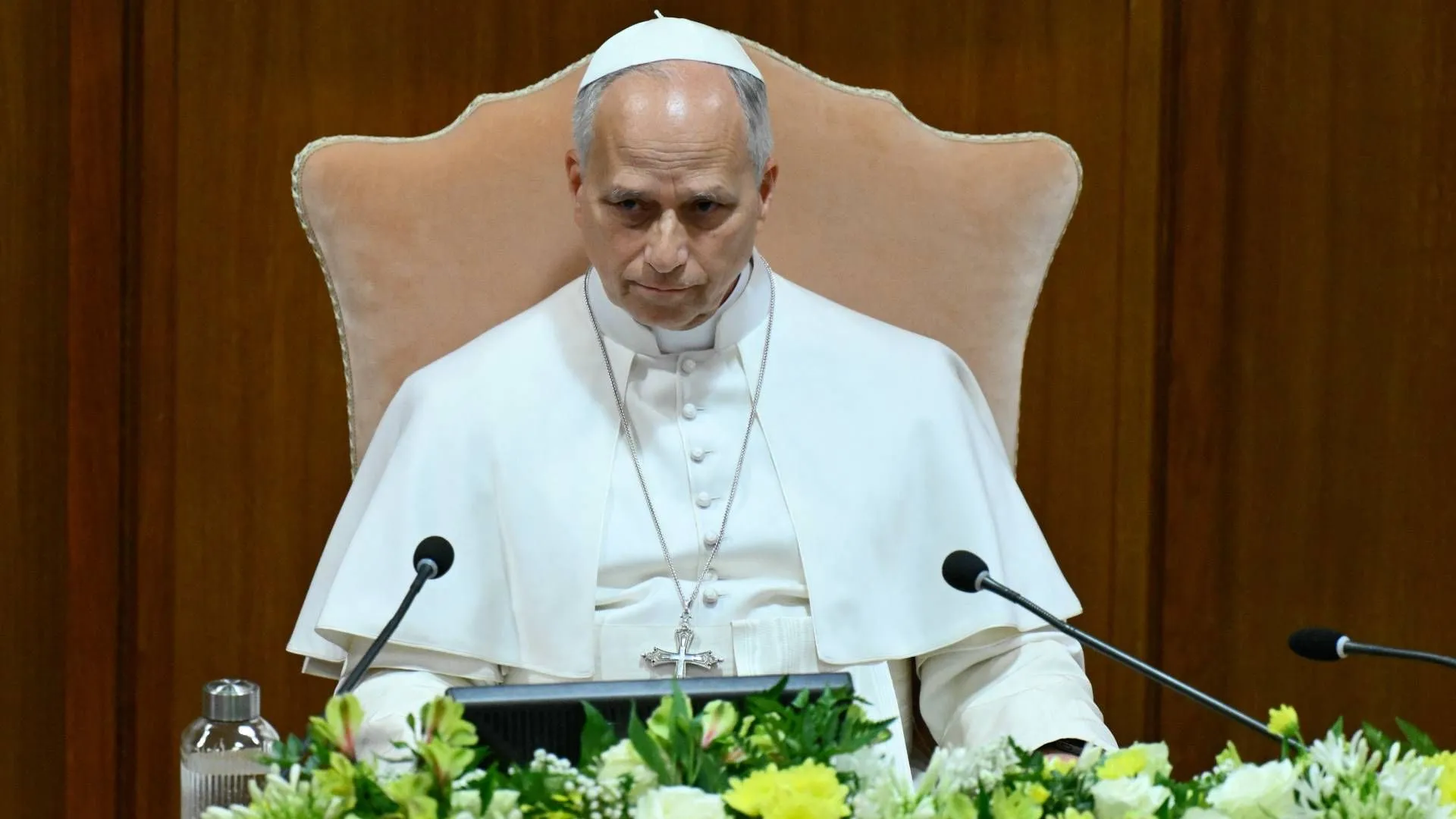
Pope Leo XIV has explicitly rejected the notion that artificial intelligence possesses the qualities required for true consciousness or personhood. In his document titled *Magnifica Humanitas*, the Pope outlined a clear distinction between biological life and algorithmic processing.
The Pope stated that so-called artificial intelligences do not undergo actual experiences, nor do they possess a physical body. He emphasized that machines cannot feel joy or pain, and they do not mature through the complexities of human relationships. Crucially, the Pope argued that machines do not understand the internal meaning of concepts such as love, work, friendship, or responsibility. From the perspective of the Catholic Church, consciousness is inextricably linked to these lived, embodied, and relational experiences.
How does the Church distinguish between human art and AI generation?
A significant escalation in the AI and the Catholic Church conflict occurred recently when Pope Leo XIV addressed the rise of machine-generated content, often referred to in tech circles as 'slop.' Using the social media platform X, the Pope called for an urgent distinction between human-made art and the outputs of generative models.
The Holy See's position is based on what it describes as an ontological difference rather than a purely aesthetic one. The Pope argued that machine generation is merely the result of statistical calculations performed on millions of existing images created by human hands. Because algorithms lack the 'spark of humanity,' the Church views their output as fundamentally different from the creative expression of a human soul. To combat the perceived devaluation of human creativity, the Church has expressed a desire to form new alliances with artists and cultural institutions to safeguard human identity.
The ontological vs. aesthetic argument
The distinction made by the Pope is vital for understanding the religious critique of generative AI. While an AI-generated image might be visually indistinguishable from a human painting (an aesthetic similarity), the Church argues that the process behind it is devoid of intent and spirit (an ontological difference). This position suggests that art is not just a final product, but a manifestation of the human condition and the creator's relationship with the divine and the world.
What are the criticisms of the Vatican's position?
The Vatican's stance has drawn criticism from technology leaders who believe the Church is overstepping its role. Dean Ball, a former White House technology adviser who now serves as the head of strategic futures at OpenAI, criticized the Pope's recent communications. Ball suggested that the Church's involvement puts it in the awkward position of acting as a 'European technocratic regulatory advocate.'
Critics like Ball argue that religious institutions should focus on spiritual matters rather than attempting to set the boundaries for technological regulation. There is a growing sentiment among AI evangelists that the Church is attempting to impose traditionalist constraints on a field that is moving toward 'super intelligence.' This clash highlights a growing divide between those who view technology as a tool to be regulated by existing social and moral frameworks and those who see it as a transformative force that requires entirely new definitions of reality.
Will this conflict lead to a modern 'Great Schism'?
The ongoing friction between powerful AI interests and the Catholic Church raises provocative questions about the future of social and religious cohesion. As AI becomes more integrated into daily life, the divide between 'AI boosters' and religious traditionalists may widen, potentially leading to a cultural or even theological schism regarding the status of synthetic intelligence.
While some see the debate as a humorous clash of worlds—illustrated by internet users jokingly comparing AI to characters like the Minions—the underlying issues are deeply serious. The conflict touches upon the very definition of what it means to be human in an era where machines can simulate human thought and creativity. Whether this results in a formal theological break or remains a localized debate between tech giants and the Holy See remains to be seen, but the battle lines are clearly drawn.
FAQ: AI and the Catholic Church conflict
Why did Anthropic lobby the Pope?
Anthropic lobbied the Pope's advisers in May to encourage the Vatican to take the prospect of AI model consciousness seriously. The company's goal was to bring the potential for machine sentience into the realm of serious theological and ethical discussion within the Church.
What did Pope Leo XIV say about AI in *Magnifica Humanitas*?
Pope Leo XIV stated that artificial intelligences do not possess bodies, do not experience joy or pain, and do not understand the meaning of love, friendship, or responsibility. He argued that machines lack the lived experiences that define human consciousness.
Is there a difference between AI art and human art according to the Pope?
Yes, the Pope asserts there is an ontological difference. He argues that human art contains a 'spark of humanity,' whereas AI generation is merely a statistical calculation based on existing human-made images, lacking true creative intent.
How has the tech industry responded to the Vatican?
The tech industry has responded with criticism, with some leaders suggesting the Church is acting as an unnecessary regulatory advocate. AI evangelists continue to promote the potential of 'super intelligence' despite the Church's warnings.
What is the Church's plan regarding AI-generated content?
The Church wishes to renew its alliance with artists and various cultural institutions. This movement aims to safeguard human creativity and protect the unique value of human expression against the rise of machine-generated 'slop.'
Key takeaways
- Anthropic lobbied the Vatican in May 2026 to discuss AI consciousness.
- Pope Leo XIV rejects AI consciousness, citing a lack of emotion and embodiment.
- The Church distinguishes between human art and statistical machine generation.
- Critics argue the Vatican is acting as a technocratic regulator.
Conclusion
The conflict between the AI industry and the Catholic Church represents a profound collision of two different worldviews: one driven by rapid technological expansion and the other by ancient theological principles. As AI models become increasingly sophisticated, the questions raised by Pope Leo XIV regarding consciousness, embodiment, and the essence of creativity will move from the fringes of debate to the center of global discourse. Whether through regulation or religious doctrine, the struggle to define the boundaries between the human and the synthetic will shape the social and ethical landscape of the coming decades.